

What’s on my iPod: “Dance” by Big Sean
What I’m reading: Lolita by Vladimir Nabokav
The last person I followed on Twitter: @WearMarcoPolo

 1. Marco Polo Designs Oscar Fun “PIN IT AND WIN IT CONTEST”
The BookSparksPR team is just LOVING this contest. Marco Polo Designs put together a Pinterest board of Oscar-inspired fashion that goes effortlessly with their jewelry. Re-pin your favorite jewelry design and automatically be entered to win the corresponding set! So awesome for everyone who loves the Oscars, Pinterest and Beautiful fashion. More details here and below:
At Marco Polo Designs, we love fashion—and we love the Oscars! (Photo courtesy ofmoviefanatic.com)
With this year’s nominees setting fashion trends, we thought it was the perfect opportunity to have some fun on Pinterest, a new online “pin board” and social media platform growing in popularity, especially among Facebook users. On Pinterest, you can create themed pin boards and post your favorite images for others to share or “Pin.”
Click on the Pinterest “P” icon from the homepage of our website to see our “Oscar Inspired” board. Or, click here: http://tinyurl.com/8xkqe7h. When you “Pin” our Oscar-inspired jewelry images, you’ll be automatically entered into a drawing to win pieces from one of four fabulous collections: Sparklers, Supernova, Amber Lava or Liquid Light.
The Pin It & Win It drawing will run from Feb. 21st through March 2nd. We will contact the winners and announce their names the week of March 12th. In the meantime, tune into the Oscars on Feb. 26th to find out which of these fashion-forward nominees will take home the gold!
Also, if you’re not currently on Pinterest and need an invitation to join, please email ushere. We’ll be happy to send you an Oscar-worthy invitation!
 2. Jennifer Gooch Hummer on Thoughts in Progress
“I wrote GIRL UNMOORED in two years, and it took me another eight to get it published. In that time, I had agents come and go, book deals promised and broken, and many, many rejections. It’s easy to think you’re the only writer who has had such a tumultuous publishing experience, until you discover that most authors go through pretty much the same thing. Truthfully, I was prepared to die of old age before I got a book deal, and made my daughters promise to delete my name from the manuscript and write down their own, should that happen.
There are, however, some good things about waiting the lifespan of a green frog to get published. (They live ten years. I looked it up.) The first being that I revised the novel down to its last possible word count. Each time an editor or agent passed on the manuscript and was thoughtful enough to comment as to why, I took his or her notes seriously, checked my ego at the door, and got back to work.”
Apron Bramhall has come unmoored. It’s 1985 and her mom has passed away, her evil stepmother is pregnant, and her best friend has traded her in for a newer model. Fortunately, she’s about to be saved by Jesus. Not that Jesus—the actor who plays him in Jesus Christ, Superstar. Apron is desperate to avoid the look-alike Mike (no one should look that much like Jesus unless they can perform a miracle or two), but suddenly he’s everywhere. Until one day, she’s stuck in church with him—of all places. And then something happens; Apron’s broken teenage heart blinks on for the first time since she’s been adrift.
Mike and his grumpy boyfriend, Chad, offer her a summer job in their flower store, Apron’s world seems to calm. But when she uncovers Chad’s secret, coming of age becomes almost too much bear. She’s forced to see things the adults around her fail to—like what love really means and who is paying too much for it.
 3. LEON GILDIN in the San Francisco Book Review
Leon Gildin – author of historical fiction novels THE POLSKI AFFAIR and THE FAMILY AFFAIR – stopped by San Francisco Book Review to give an in-depth glimpse to the story behind the two highly acclaimed novels that were over thirty years in the making. Here is a highlight of the guest post:
“There are few subjects that have been so extensively written about as the Holocaust. Nevertheless, Shulman gave me a research work that dealt with a little-known event that took place in Warsaw after the destruction of the ghetto in 1943. The book consisted of an Introduction that related the author’s research into the happening, the analysis of others with whom he had spoken and the historic background of the time in which the event took place. But the final sentence of the Introduction is the one that stuck with me for years to come: “The greater the details of evidence the more confusion the conclusion seems to be.” How is this possible?
The book included interviews of survivors who had been at the Hotel Polski. Their descriptions of what took place and how people reacted were quite unbelievable. You may be sure it was a book whose contents stayed with me but, at that time of my life, making a living was foremost, and the book was relegated to a shelf in my library.
In addition to the practice of law, I also dabbled in the theatre and the idea of a play based on Shulman’s research became an idea worth pursuing. I never got beyond the second scene of the first act. There were so many characters that not even a not-for-profit theater company would consider such a play. So the book went back on the shelf and the play notes went into a drawer.”
More on Gildin’s latest, THE FAMILY AFFAIR
How can a woman’s struggle to reconcile her guilt of survival both unite and divide her family for years to come? It is some two years since Anna Adler returned from a reunion of the survivors who were “guests” of the Hotel Polski after the destruction of the Warsaw ghetto. At the reunion, she was applauded for her courage in testifying against the Commandant of the Polski at his War Crimes Trial. Despite the accolades, Anna’s obsession with what took place at the hotel during her period of imprisonment continues to haunt her.
The Family Affair, a sequel to The Polski Affair, tells of the fortuitous discovery of new members of Anna’s family, bringing her both joy and torment. For Anna, the ties that bind run deeper than she cares to remember … or admit. This results in explosive revelations and a family forever changed, proving that some things are better left unsaid.
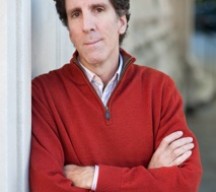 4. Jon Reiner on Memory Writer’s Network
Jon Reiner, author and man behind THE MAN WHO COULDN’T EAT, stopped by Memory Writer’s Network for a Q&A about his highly acclaimed memoir. Here is a highlight of the interview:
When did you realize the guy you were writing about was flawed and didn’t behave like a prince or hero? Was it disturbing to write so honestly about these aspects of yourself, showing yourself so crushed, with all this dismal truth?
Jon Reiner: Have you been talking to my mother? You’ve made an insightful observation contrasting marketing writing and literary writing (and you’re the first interviewer who’s commented on my office career. You have been talking to my mother.) In the former, depicting perfection is the writer’s objective. In the latter, the writer’s exploration of imperfection is essential to compelling storytelling. My literary training and orientation is as a fiction writer, and it was natural for me to apply that method to writing The Man Who Couldn’t Eat. For memoir writing, however, there’s another element in the equation that’s uniquely important — personal honesty, something that was impressed upon me at the start of the writing. My agent, Mitchell Waters, who had worked with other memoirists, advised me that I would need to be brutally, even painfully, honest in the storytelling if I were to write a compelling memoir. I held myself to that in portraying the arcs of the characters over the one-year-period that’s depicted in the book — but it’s a tricky business. Emotionally, writing a memoir was much more difficult than writing fiction.
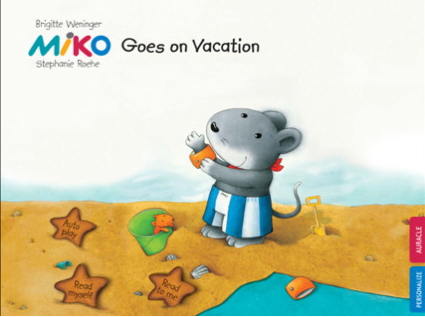 5. Apps by Auryn Inc. in San Francisco Book Review
Leave A Comment